Toxic Tide: How Rising Seas Threaten America’s Coastal Communities with Pollution
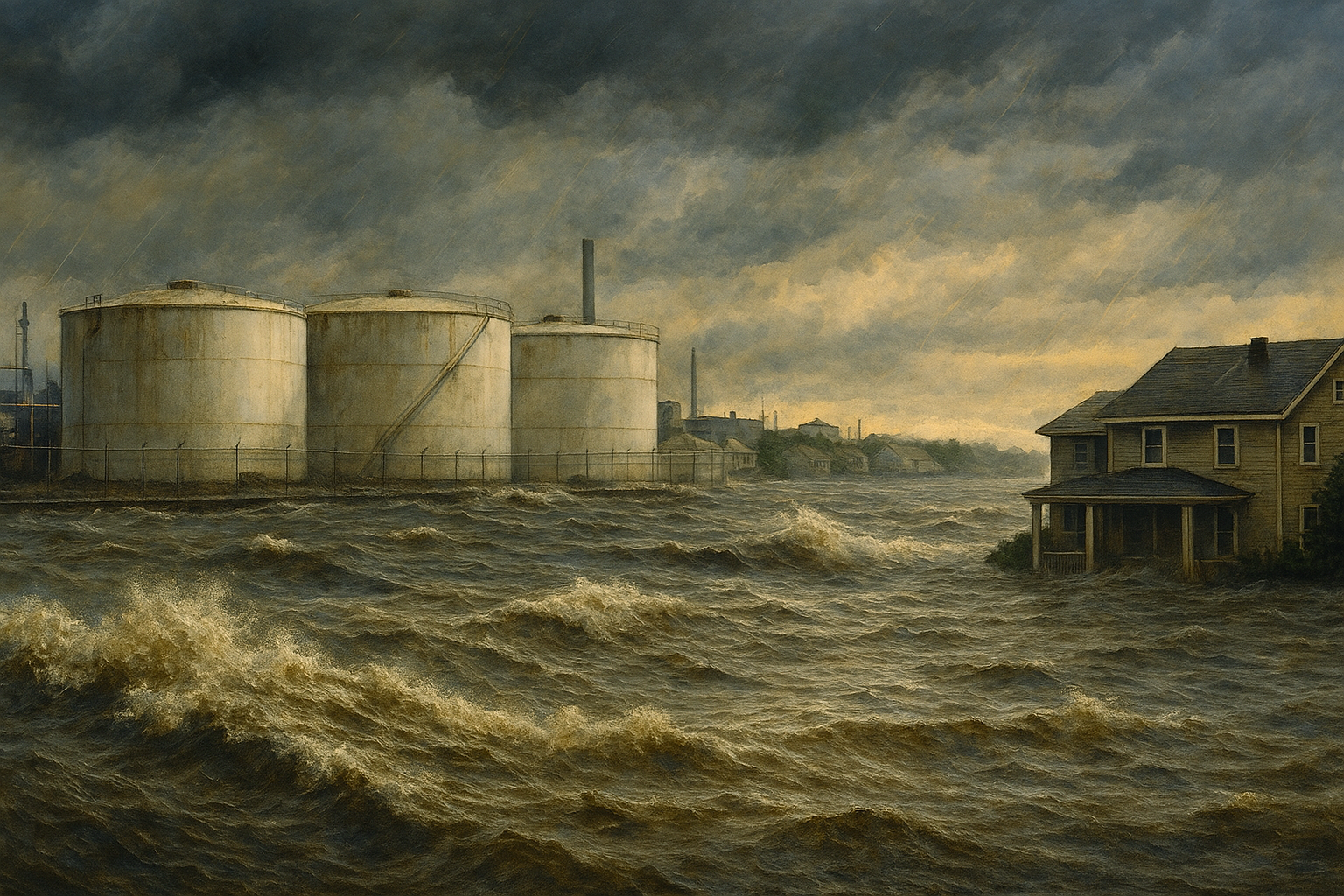
Sea level rise is often framed as a story of disappearing shorelines. But a new study warns of a more insidious threat: thousands of toxic sites across U.S. coastal states are at risk of flooding, potentially releasing chemicals into neighborhoods and waterways.
The Scale of Risk
Researchers estimate more than 5,500 hazardous sites could flood by 2100, with 3,800 at risk as soon as 2050. These include sewage plants, refineries, and defense facilities — places where contamination would spread quickly once floodwaters breach containment.
States in Peril
Florida, New Jersey, California, Louisiana, New York, Massachusetts, and Texas account for nearly 80% of the risk. Past storms like Katrina and Harvey already demonstrated how floods can unleash toxins, turning natural disasters into chemical emergencies.
The Violation
Communities face compounded harm: climate change drives the water, while regulatory gaps leave toxic facilities unprotected. Pollution here is not hypothetical — it is inevitable without action. The violation is systemic, exposing residents to risks they did not choose.
The Allegory
Floodwaters become a metaphor for accountability. Rising seas are not just a natural phenomenon; they are carriers of hidden poisons, reminders of neglected oversight. The toxic tide is both literal and symbolic — a mirror of our failure to contain the past.
Conclusion
Climate change doesn’t just raise seas, it raises the stakes of pollution enforcement. Without urgent safeguards, America’s coastal communities will face not only rising water but rising contamination. The tide is coming — and it carries more than salt.