When the Grid Heats Up: America’s Cooling Crisis and Water Wars
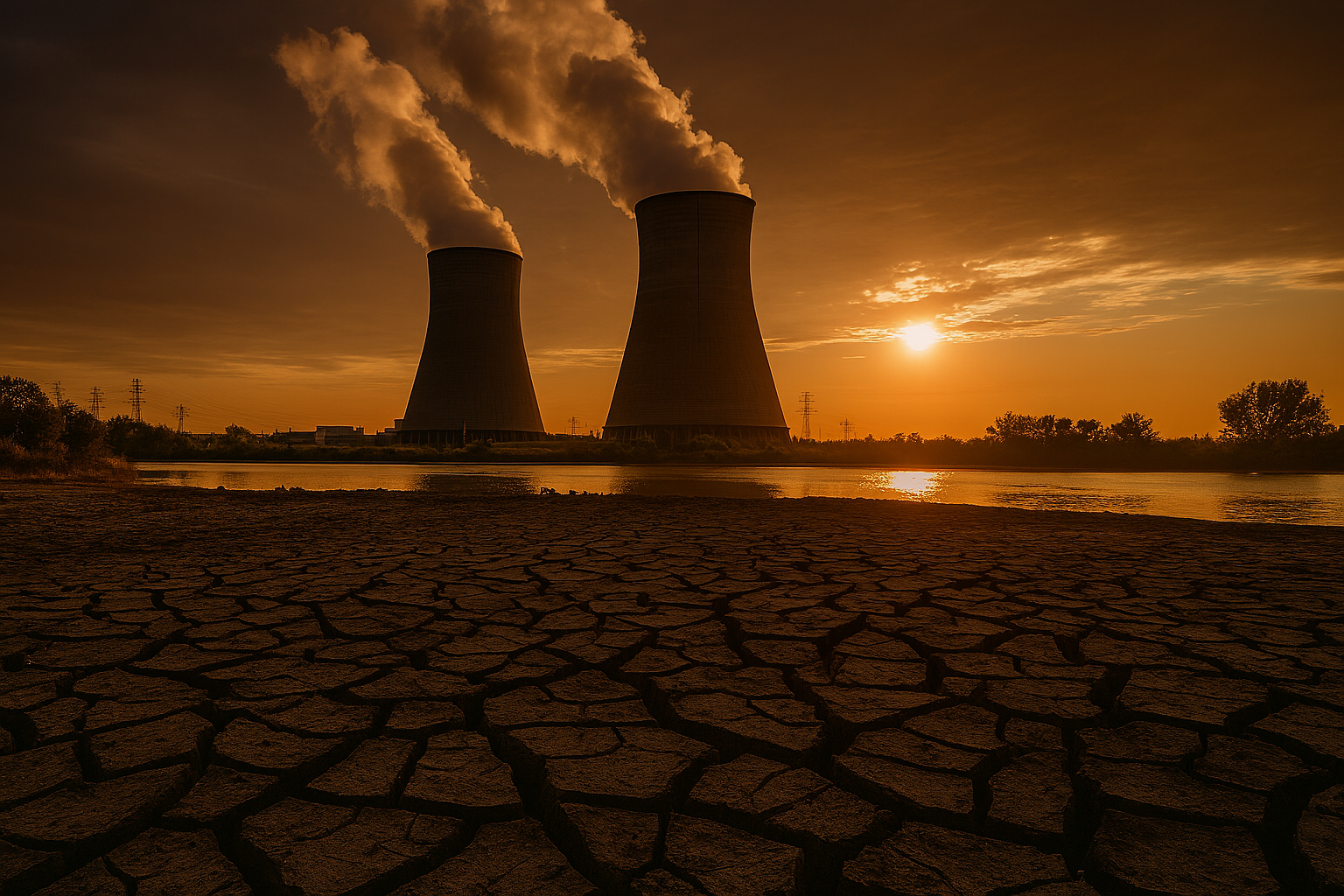
In May 2025, Texas endured a record-breaking heatwave with temperatures soaring past 111°F. As millions of residents cranked up their air conditioners, electricity demand surged to 78,000 megawatts—an all-time high for May. Behind those numbers lies a hidden crisis: the more we cool our homes, the more we strain water supplies and worsen pollution.
The Energy-Water Nexus
Thermoelectric power plants—coal, gas, and nuclear—account for about 40% of total U.S. water withdrawals each year, primarily for cooling. In 2022 alone, they withdrew 48.5 trillion gallons of water, consuming nearly a trillion gallons that never returned to rivers or reservoirs. Coal plants are especially thirsty, withdrawing 19,185 gallons per megawatt-hour compared to just 2,803 gallons for natural gas combined-cycle plants.
This dependence becomes catastrophic during droughts. In the Colorado River Basin, shrinking reservoirs at Hoover and Glen Canyon dams have already cut hydropower output, threatening electricity supplies for 40 million people and 5 million acres of farmland.
Heatwaves and Pollution Spikes
When demand spikes, fossil fuels often fill the gap. During Texas’s May 2025 heatwave, gas plants ramped up production, adding millions of tons of greenhouse gases. The Environmental Integrity Project estimates that proposed gas plant expansions in Texas could add 115 million metric tons of greenhouse gases annually—equivalent to emissions from 26.8 million cars.
The health toll is staggering. The American Lung Association’s 2025 State of the Air report found that 156 million Americans—46% of the population—live in areas with failing grades for ozone or particle pollution, a sharp increase of 25 million from the previous year.
Communities at Risk
Low-income and minority communities often live closest to power plants, facing “double exposure”: polluted air from increased generation and water scarcity from cooling withdrawals. In Texas, at least 14 proposed gas plants are slated for areas already violating EPA ozone standards, amplifying environmental injustice.
Policy and Regulatory Gaps
The Clean Water Act does not adequately address conflicts between energy production and water scarcity. Meanwhile, grid reliability policies often prioritize electricity supply over water sustainability. The EPA recently lowered the annual PM2.5 standard to 9.0 micrograms per cubic meter, citing cardiovascular risks, but political debates threaten its enforcement.
Emerging Solutions
Renewable energy sources like solar and wind sidestep the water problem entirely, needing little to no cooling. Advanced technologies—dry cooling systems, closed-loop designs—can slash water use at existing plants. Smarter grid management, from demand response programs to efficiency incentives, can flatten the peaks that drive pollution and water withdrawals. And water recycling projects, such as Pure Water Southern California, aim to reclaim 150 million gallons per day, easing pressure on the Colorado River.
Conclusion
America’s cooling crisis is not just about comfort—it’s about survival. Heatwaves, droughts, and pollution are converging into a single challenge that demands holistic solutions. By recognizing the energy-water nexus, we can build a future where cooling our homes doesn’t mean heating the planet or draining our rivers.